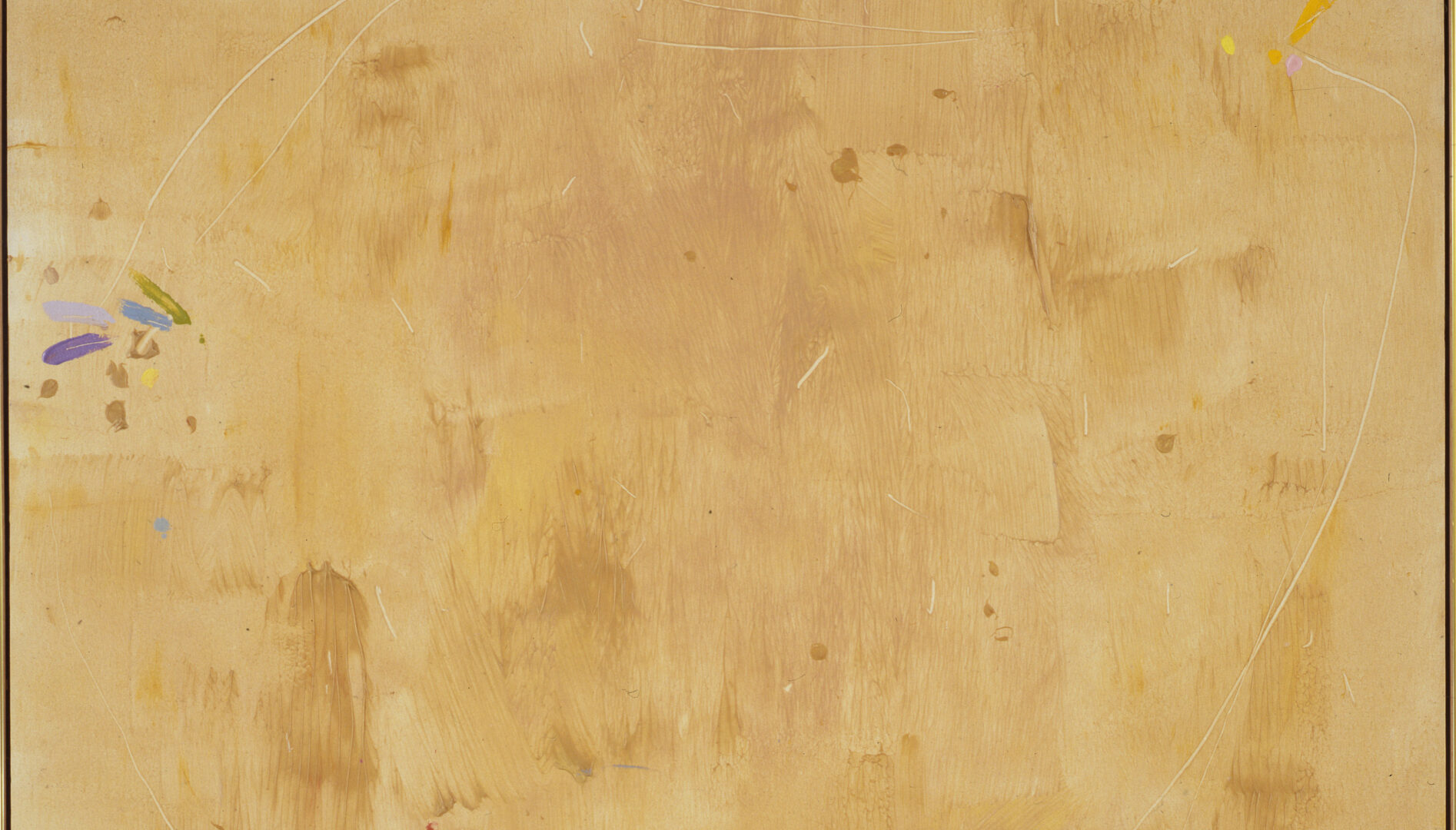
A companion to The Art of Mark Rothko, this exhibition presents the vitality of abstract painting in American art from Rothko’s time to the present. Rothko created abstract paintings with rich colors that filled the canvas from edge to edge. His example inspired other painters to focus exclusively on color, form, and surface in their works and avoid any representational depictions. Artists like Helen Frankenthaler, Morris Louis, and Jules Olitski found a great variety of expression in this process of underscoring the foundational elements of their paintings. This approach wasn’t limited to painting. Artists like Aaron Siskind in photography and Gertrud and Otto Natzlers in ceramics concentrated on the unique qualities of their materials to further explore the possibilities of abstraction in different artistic disciplines.
Yet by the 1970s, some artists, including feminist artists Valerie Jaudon and Arlene Slavin, considered this strict attention to form too limiting. They began to challenge this orthodoxy by connecting their artworks to everyday patterns and decorations. Over recent decades, a diversity of artists, like Kikuo Saito, Reginald Sylvester II, and Kay WalkingStick, all shown here, have used abstraction to refer to the world and their experiences beyond the frame of the canvas, further expanding the possibilities for abstract art to connect with meaning and self-narrative.