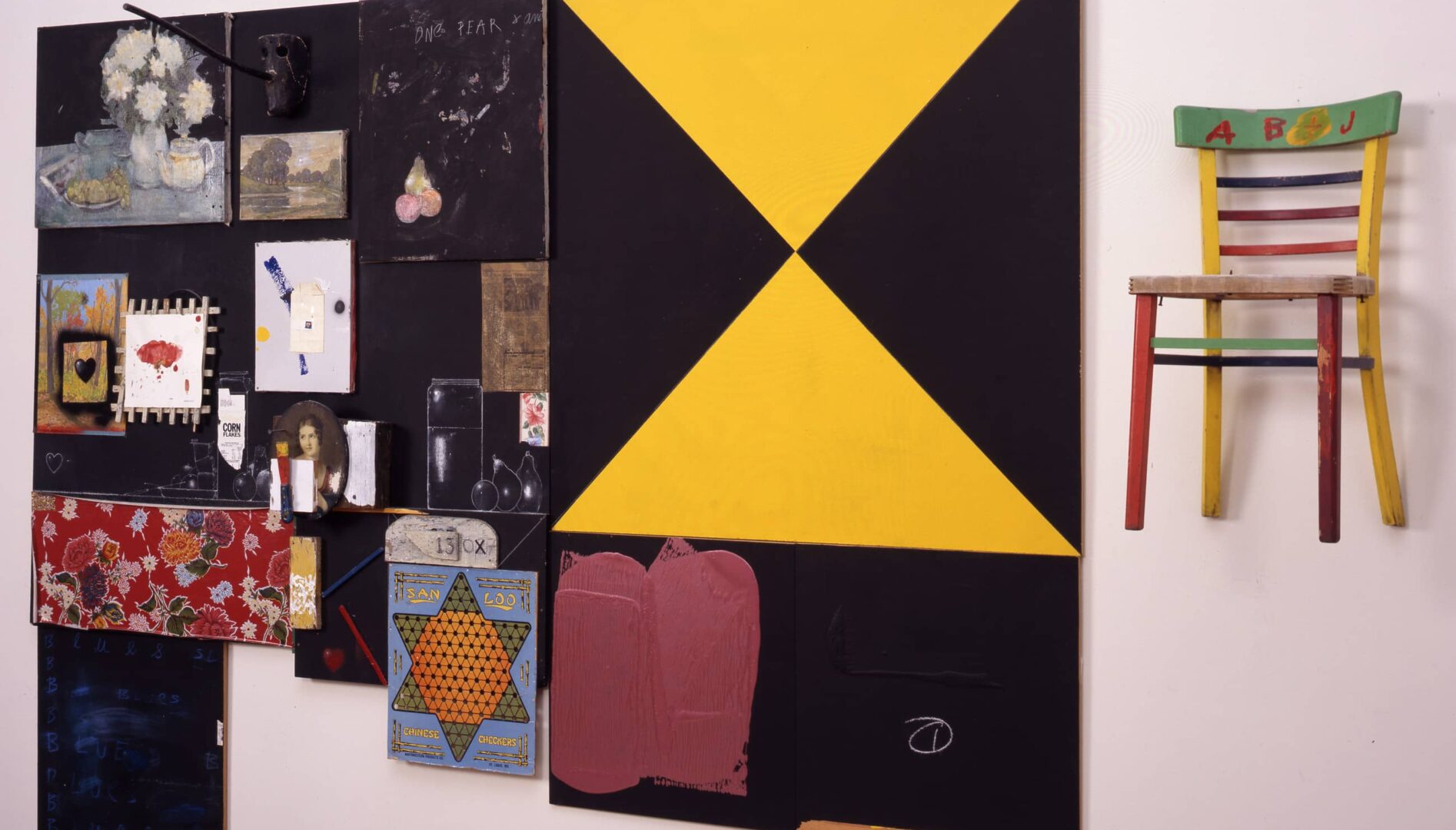
From the 1960s onward, artists engaged in a vibrant expansion of stylistic approaches, idea-driven practices, and material exploration. In some circles, they embraced the value of concepts as the foundation for their art, placing significance on the intellectual over the final appearance of the artwork. Many prized “dematerialization” and the spare, formal approach of Minimalism by moving away from the rarified media of fine art toward industrial materials and even the phenomenon of light as their subject. Dan Flavin, Joseph Kosuth, and artists of the California Light and Space group considered thought, perception, and experience to be the most important consideration for viewers.
Other artists explored the associations that arise from certain materials and images, and how these elements communicate meaning. Employing processes such as collage and assemblage, artists brought together disparate elements to suggest narratives that reflect upon personal, cultural, or historical issues. This exhibition features works by women artists, queer artists, and artists of color, many of whom emphasized physicality and expressiveness as both a counterpoint and a resonant gesture to the conceptual art of the same years, as similarities arose between the seemingly opposite artistic forms.