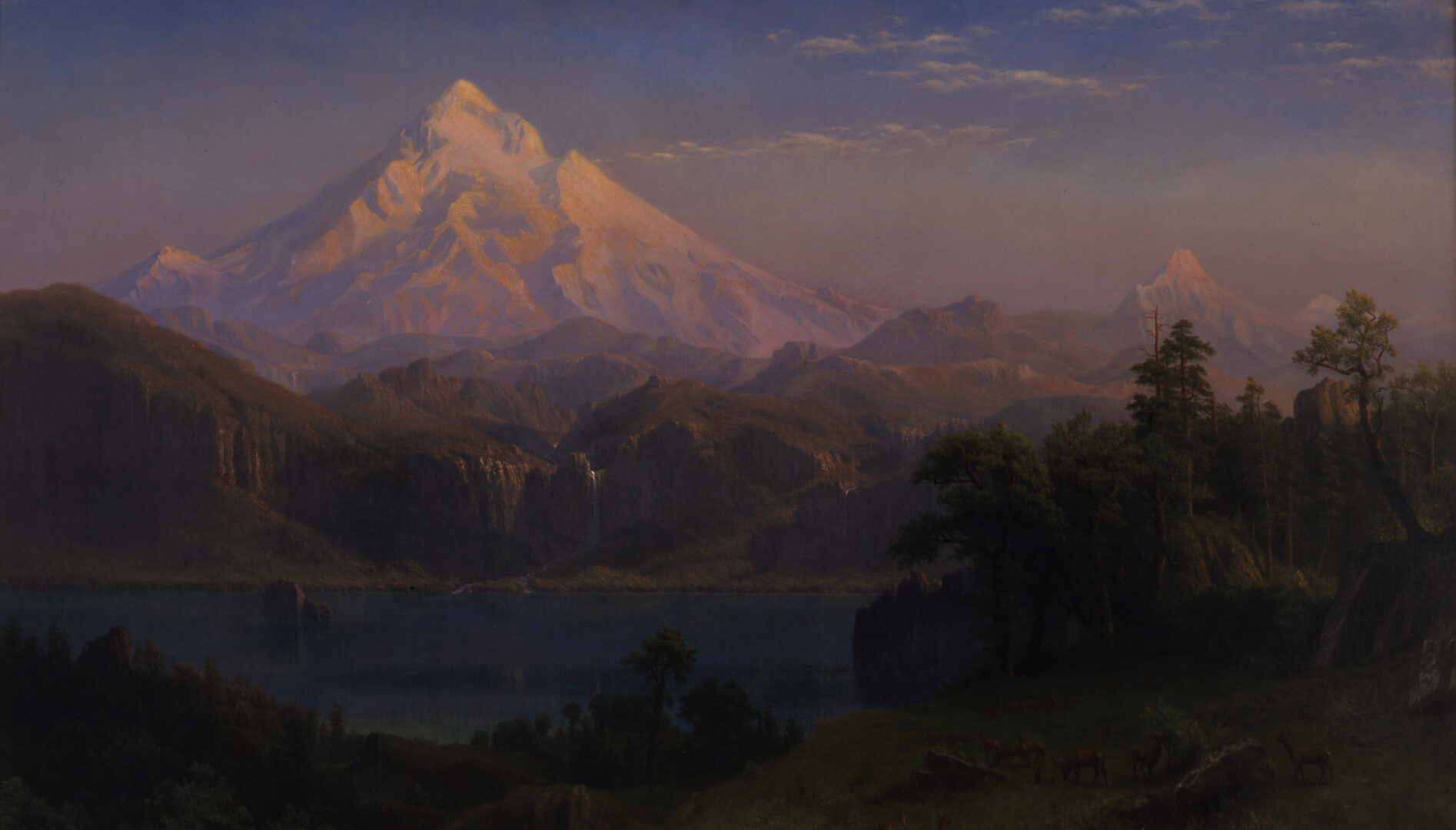
Mount Hood’s iconic form, isolated presence on the horizon, and impressive height all serve to mark the natural monument as home for Portlanders. It has inspired generations of artists, from Childe Hassam and Albert Bierstadt, to Sekino Jun’ichirō, who recognized its affinity to Japan’s Mount Fuji when working here in the 1960s.
In 1890, Northwest author Frederick Balch, who had extensive experience with local tribes published Bridge of the Gods, in which he claimed to tell the Native story of the mountain. His tales have never been corroborated, and in fact serve as a kind of erasure of Native knowledge. The Native peoples of the river valleys had decades prior been forcibly removed to the arid lands adjacent to the mountain, established as the Grand Ronde Reservation in 1857 and Warm Springs Indian Reservation in 1855. In Balch’s account Mount Adams and Mount Hood were sons of the Creator, and their eruptions were expressions of their rivalry for a beautiful woman. In a later theatrical production of the book, Mount Saint Helens became Loowit, Mount Adams was Pahto and famously Hood became Wy’east.