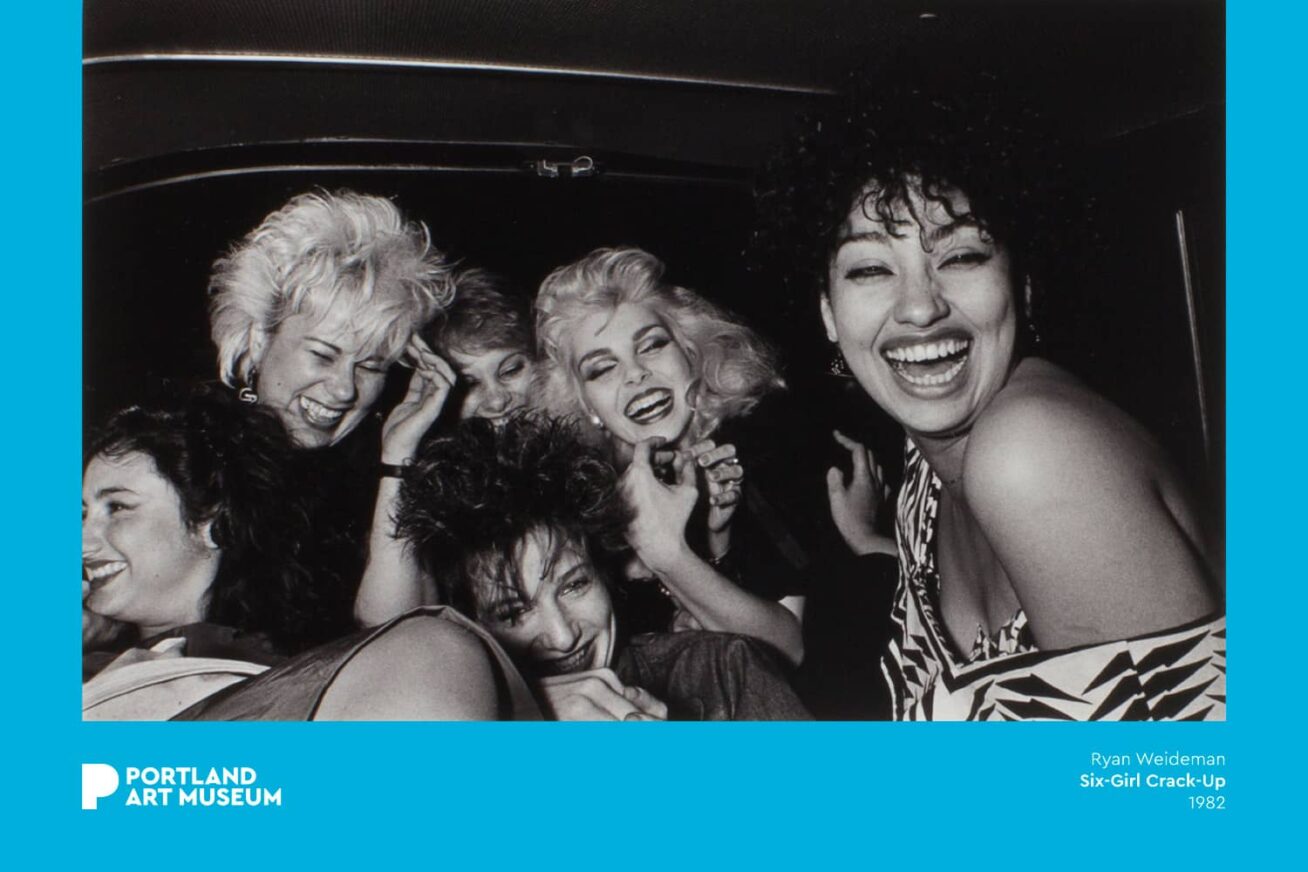
Like many emerging artists, Ryan Weideman moved to New York City after college, hoping to become a street photographer. Instead, he became something even more unique—a taxicab photographer. While studying art at Long Beach State University and the California College of Art and Craft during the 1970s, he learned about and was influenced by film noir aesthetics such as high-contrast lighting, mysterious subjects, and off-balance compositions. He was also influenced by street photographers including Robert Frank, Diane Arbus, and William Klein, who captured unexpected moments and human interactions in large, densely populated cities. New York was a particularly vibrant and rich environment for street photographers, and Weideman dreamed of living and working there.
Weideman relocated to New York City in 1980, intent on living as a photographer. He soon moved into a tiny apartment in Times Square and looked for a job that would cover his rent. His cab-driver neighbor suggested taxi work, and Weideman began driving a Checker cab between 5:00 p.m. and 5:00 a.m. He loved the adventure of moving through the city at night, shuttling partygoers and late-shift workers from neighborhood to neighborhood. Within a week of driving on the night shift, he began asking his passengers for permission to photograph them. On his days off, he developed the film and made prints.
Checker-brand taxi cabs, which were widely used by New York cab companies from the 1960s through the 1980s, were very large cars that could seat up to eight passengers. Sometimes, Weideman would photograph a single rider appearing swallowed up by the large back seat. At other times, he captured a crowded compartment of people going out to dinner or a club, or heading home from a night on the town. Weideman combined street photography style (off-center compositions, unusual cropping, movement) with portraiture (attention to a sitter’s facial expressions, clothing and hair details, and body language). He had to work quickly with his 35mm camera and flash, contorting himself in the cab’s front seat in order to capture the people sitting behind him before they left the cab and moved on with their lives after their brief encounter.
In Six-Girl Crack-Up, Weideman captures a group of friends who are either on their way to, or returning from, a night out on the town. Their spiked, curled, and feathered hairstyles, which were popular in the early 1980s, complement their carefully applied makeup. Their laughter indicates great joy in their gathering. The cab’s back window frame arches over the individuals, helping to tie together the jumbled composition of faces and limbs. Aspects of the photograph, including the closed eyes of some of the subjects, is reminiscent of snapshot photography. Although Weideman does not appear in this photograph, it is clear that the travelers are responding to him as he makes the picture: They are enjoying the portrait process as well as each others’ company.
In later years, Weideman began including himself in these cab portraits, an approach he called “crashing the party.” His inclusion further underlined the brief but meaningful relationship he formed with his passengers. Instead of turning around to face his subjects, he faced forward and created a selfie that included whomever was in the backseat. As with his earlier pictures, these portraits are brightly lit with flash and compositionally complex, heightening the emotional content of the images and suggesting that people can form relationships in mere minutes.
Although Weideman carried his camera with him almost everywhere, always making photographs outside of his cab, he is best known for this series. He drove taxis and made these photographs for over 35 years, retiring from driving in 2016. He still lives in the Times Square apartment he moved into when he first came to New York City in 1980.
Discussion and activities
- What is going on in this picture? Describe the scene as you imagine it. What sounds and smells might you experience here? Who are the people we see? What happened just before this moment and what happens just after? On your own or with a partner or group, write a story inspired by this photo.
- How does looking at this artwork make you feel? Can you make a connection to a time you felt that way? What were you doing? Who were you with? How might you capture that moment in a work of art?
- Look closely at the framing and composition of the image. What do you notice about the use of negative space and the placement of faces and figures? How does Weideman’s use of high-contrast lighting contribute to the impact of the image?
- Experiment with these techniques in your own photography. You might draw inspiration, as Weideman did, from film noir, such as Touch of Evil (1958), The Big Sleep (1946), and Sunset Boulevard (1950).
- Create a pair of portraits in which one shows the complete face and the other shows only part of the face, due to framing or shadow. Compare the two images and discuss how the full view or partial concealment of the face affects the mood and meaning of each image.
- Take your own “crowded space” photographs. How does the cramped space affect the dynamics between the people in the photo? How do those dynamics change when the photographer also appears within the frame as in today’s selfies or in Weideman’s own later photographs?
Selected sources
Bruce Silverstein Gallery: Ryan Weideman
Amy Fleming, Allen Ginsberg in the back of my cab: Ryan Weideman’s best photograph, The Guardian, September 17, 2025. Accessed Dec. 19, 2025.
John Leland, A Taxi Driver’s Photos of New York, New York Times, November 10, 2016. Accessed Dec. 19, 2025.