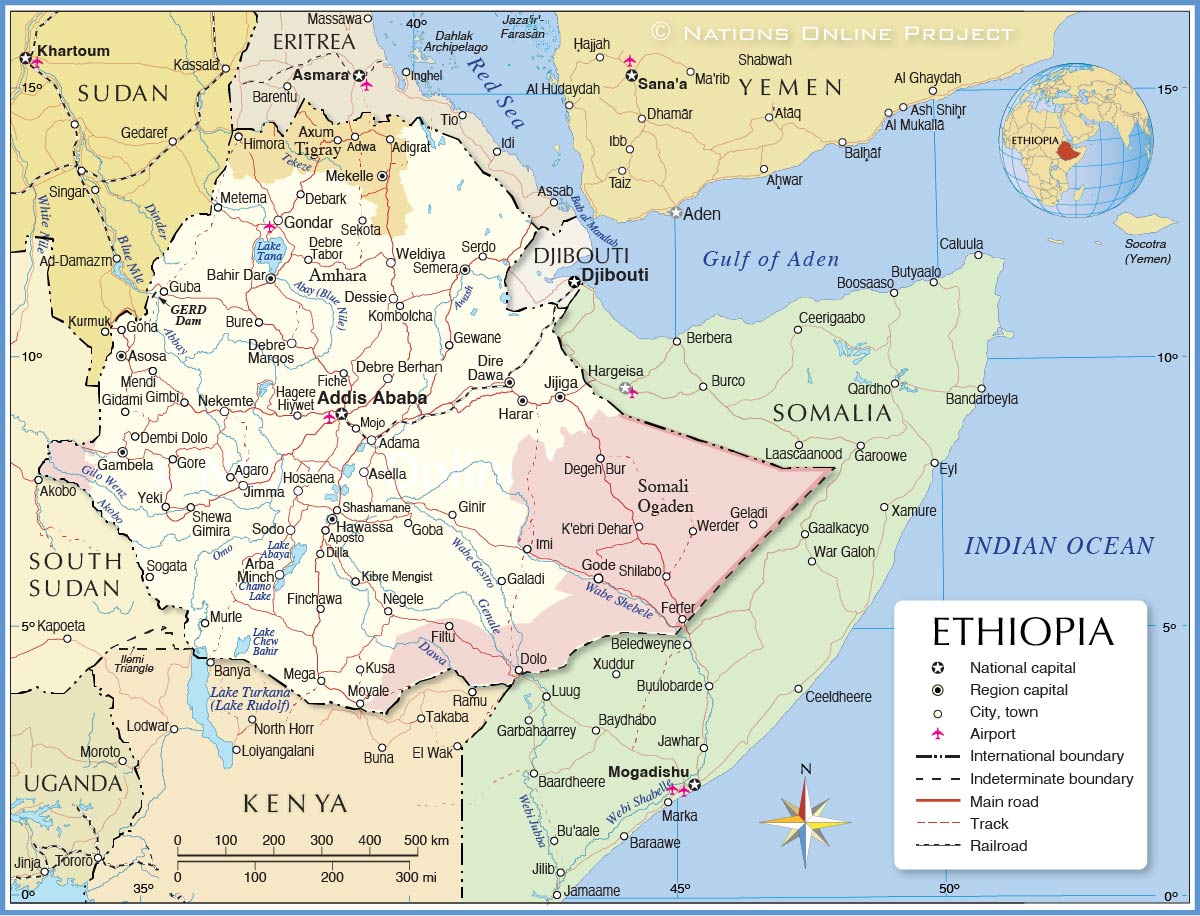
Elias Sime weaves, twists, and hammers “e-waste” – the tech industry’s discarded computer wiring, keyboards, microchips, motherboards, and more – into compositions that depict landscapes, maps, and architecture. Sime (pronounced see-may) sources his materials at the Merkato, Africa’s largest open air marketplace, in his home of Addis Ababa, Ethiopia. There, vendors sell cast-off, and sometimes toxic, supplies that have been shipped from around the world.
Sime’s use of the guts of cellphones and computers reveals the inner workings of the global communication system, which is mostly invisible to us. The artist describes his art as on a “tightrope” between nature and technology. He asks us: “How do you balance the earth from collapsing with the need for technological consumption?” Even though technology is an invaluable tool, its manufacturing and disposable products damage the environment and harm the populations close to mineral mines and post-consumer dumps.
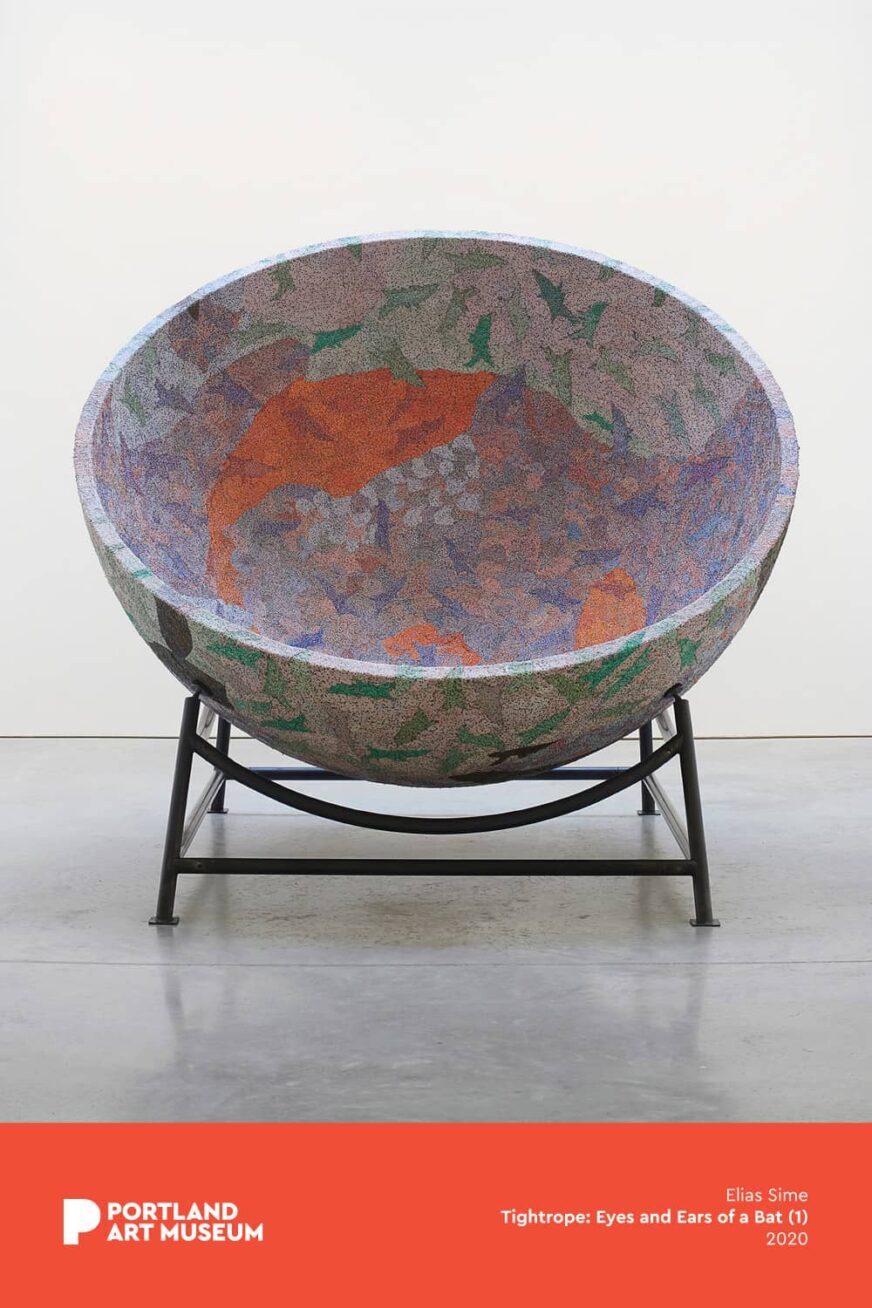
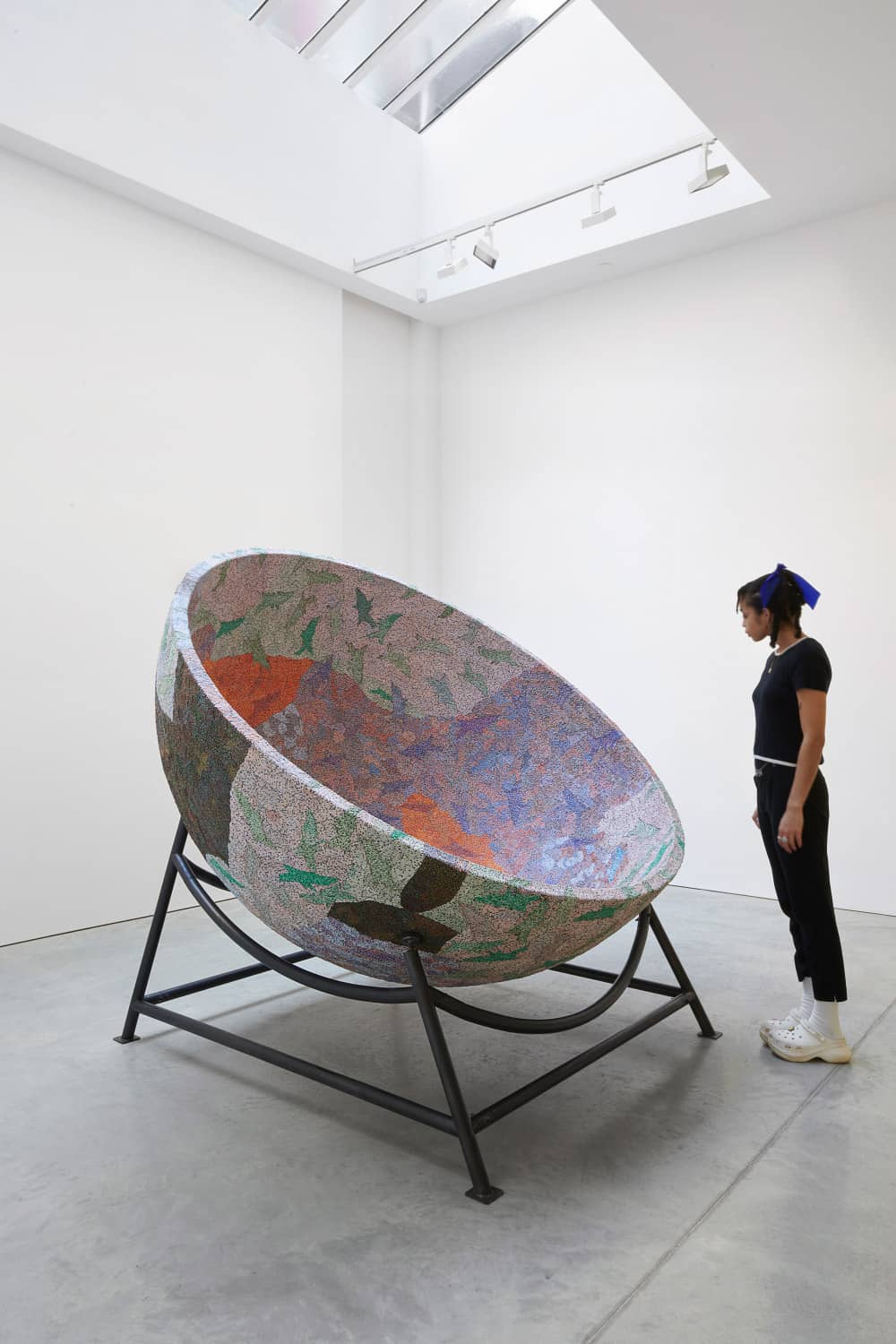
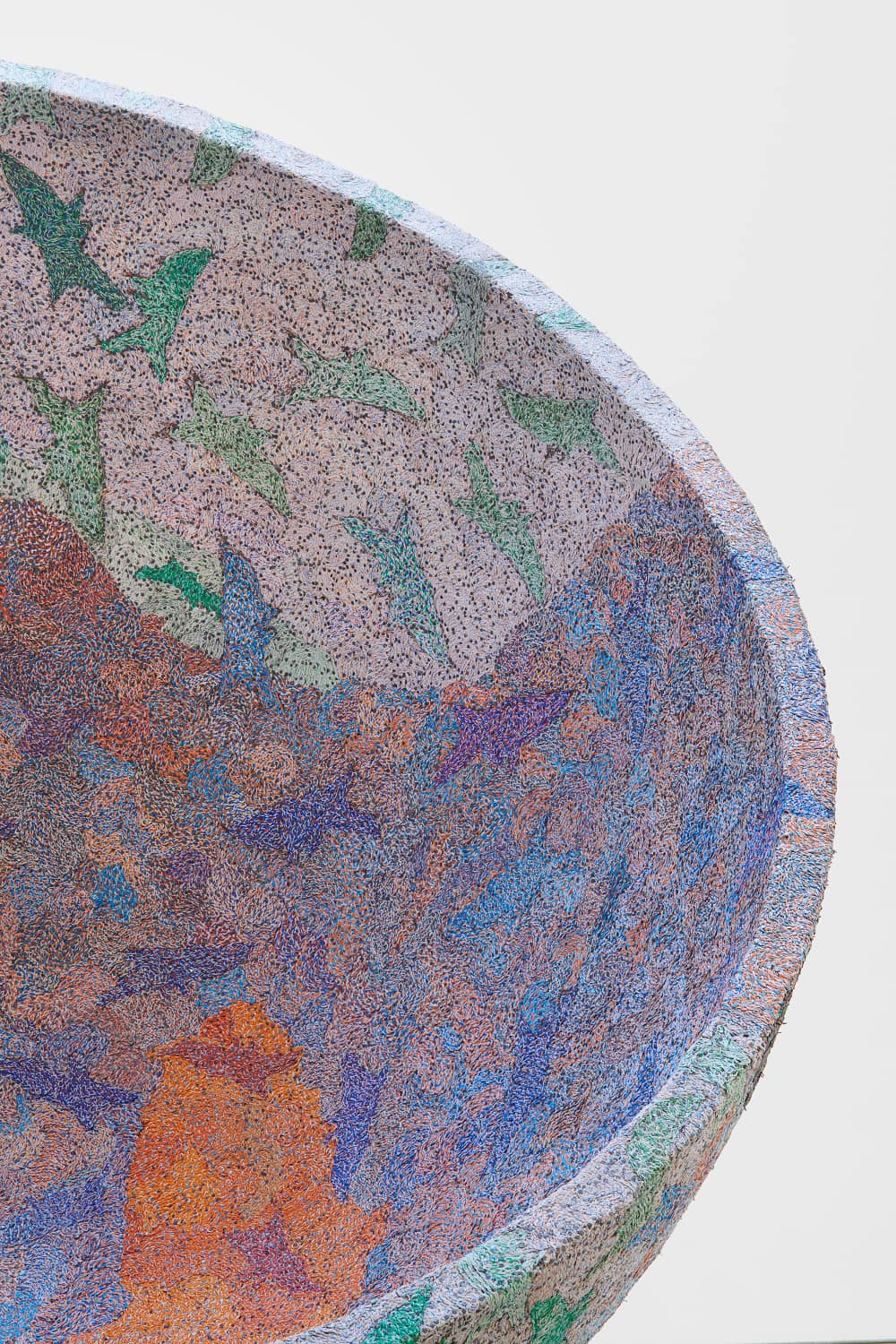
Tightrope: Eyes and Ears of a Bat (1) is composed of colorful wires braided together and attached by small nails to a large bowl. Across the surface, patterns represent land formations. Small bat-like shapes appear to fly above them. Sime drew his inspiration for this work from a trip to St. Louis, Missouri, where he visited two monuments: Eero Saarinen’s Gateway Arch (opened in 1963) and the Cahokia Mounds, the site of an Indigenous settlement that reached its peak in the year 1100. Taken together, these two impressive places suggested to him how human cultures communicate across centuries through the constructions we leave behind.
Sime compares the shape of this sculpture to a cave and a megaphone, a device he links to the loud volume of political speech today. He brings these two ideas together by explaining: “Bats hang upside down. To a casual observer, this unusual standing position is discomforting. To the bats, it is their natural position. I often wonder if the hollow shape of the caves’ interior is what gives the bats a sense of comfort. Similarly, the ideas amplified through megaphones can be comfortable to some and disturbing to others.”
For Sime, the process of weaving has special meaning. It symbolizes interconnection across cultures, species, and time periods as well as the complexities of our globalized world. His art suggests the fragility of communication and asks us to consider the tensions between tradition and progress, nature and technology, and real and virtual worlds.
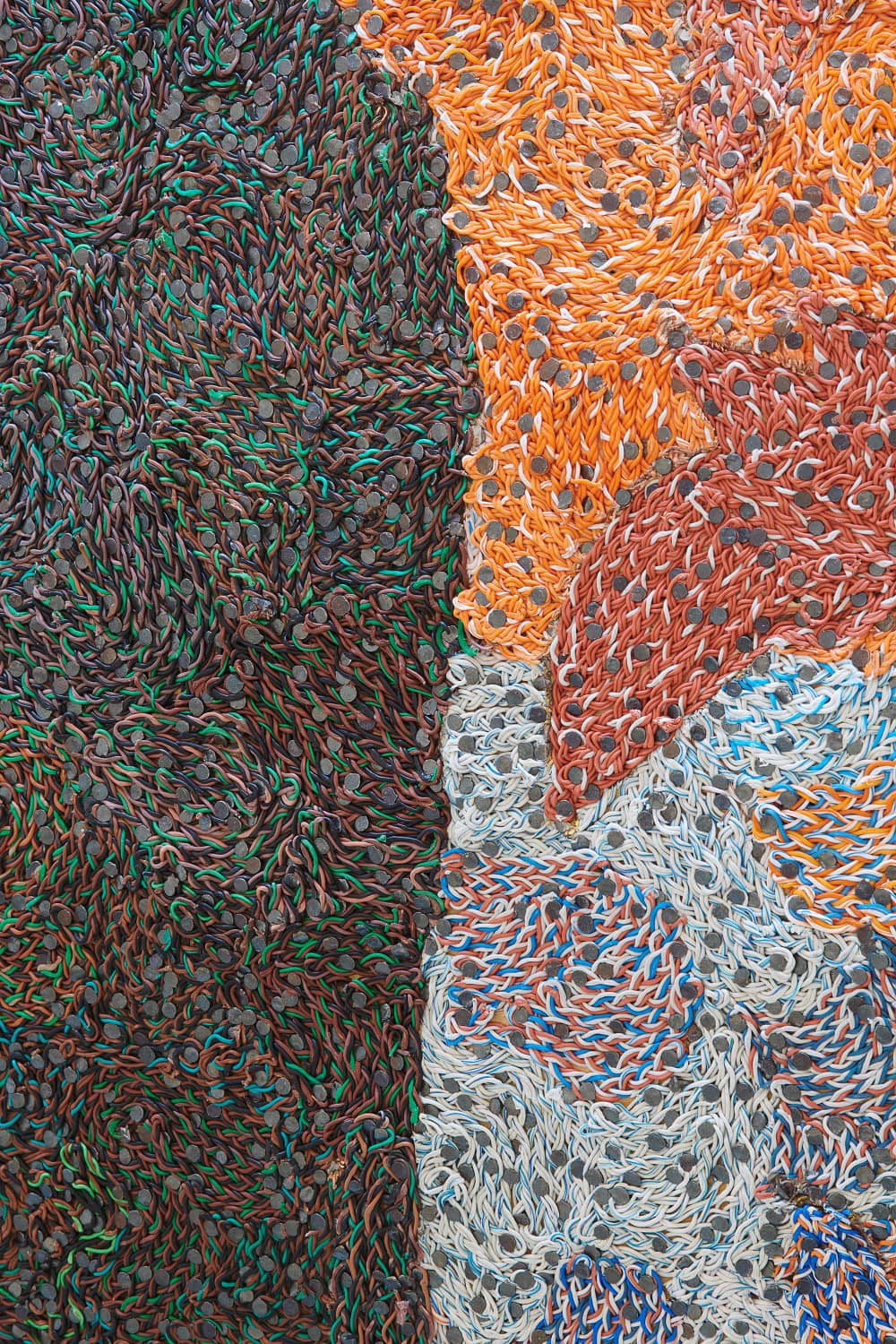
Photography by Phoebe d’Heurle
Discussion and activities
- Write down your first impressions of this artwork when you saw the front of the poster or first saw the work in the Portland Art Museum. What did you first notice about it? How did those impressions change when you saw the close-up, detail photos of the work or moved closer to it in the gallery? How would you describe this sculpture to someone who has never seen it? Why do you think Sime chose to make the work so large–nearly four feet high and seven feet wide?
- Sime has said, “Humans are the bridge between the natural and built environments. We cannot be separated from either one.”* Where do you see nature in this artwork? How do you interpret the title: Tightrope: Eyes and Ears of a Bat (1)? How does this work explore relationships between nature and technology?
- Research the places that inspired this artwork: the Merkato in Addis Ababa and the Gateway Arch and the Cahokia Mounds in St. Louis, Missouri. What connections do you see between them? How do you see their influence in Sime’s art?
- Sime is interested in how humans communicate across time through the production of artifacts and monuments, as well as what the legacy of human production and consumption will be in the future. Imagine you are encountering a time traveler from the year 3025. How might you use this work of art to explain what 2025 was like to them?
- Compare Tightrope to two other sculptures featured in the Poster Project that are also made of found materials: Wally Dion’s Green Star Quilt and Lynn Aldrich’s Biophilia. What differences and similarities do you notice between these three works? What connections do you find between the ideas the artists are exploring?
- Create your own sculpture of found objects. As you select your materials, consider: How are these objects normally used? What meanings or associations do they carry? How are they related to each other? What unites them?
*Hannah Klem and Molly Moog, “Elias Sime: Walking a tightrope between nature and technology,” Saint Louis Art Museum Blog, July 30, 2020. www.slam.org/blog/elias-sime-walking-a-tightrope-between-nature-and-technology
Selected sources
Alexander Morrison, “Elias Sime unearths the catastrophic beauty of mineral extraction in his new Venice show,” The Art Newspaper, 18 April 2024.
Hannah Klem and Molly Moog, Elias Sime: Walking a tightrope between nature and technology, Saint Louis Art Museum blog, July 30, 2020.
Currents 118: Elias Sime, Saint Louis Art Museum, July 31, 2020–January 31, 2021 (includes videos).
Meskerem Assegued, “Tightrope: Echo?! Elias Sime,” James Cohan Gallery, 2021.
Elias Sime, James Cohan Gallery.
Elias Sime: Tightrope, September 7 — December 8, 2019, Wellin Museum, Hamilton College.
Elias Sime: Tightrope, YouTube, Arnolfini Arts, Nov. 9, 2023. (8:22 minutes)
The Art of Telephone Wire: A World of South African Weaving, Museum of New Mexico Foundation.
Addis Mercato. Wikipedia.
Mercato Bazaar in Addis Ababa. Getty Images.