
Community Weaving and Collage with Elbow Room Artists
Overview
Accessibility: Wheelchair accessible, seating available, neurodivergent-friendly, verbal descriptions and tactile materials available, written instructions and visual examples available. Media works will be projected on the screen without audio.
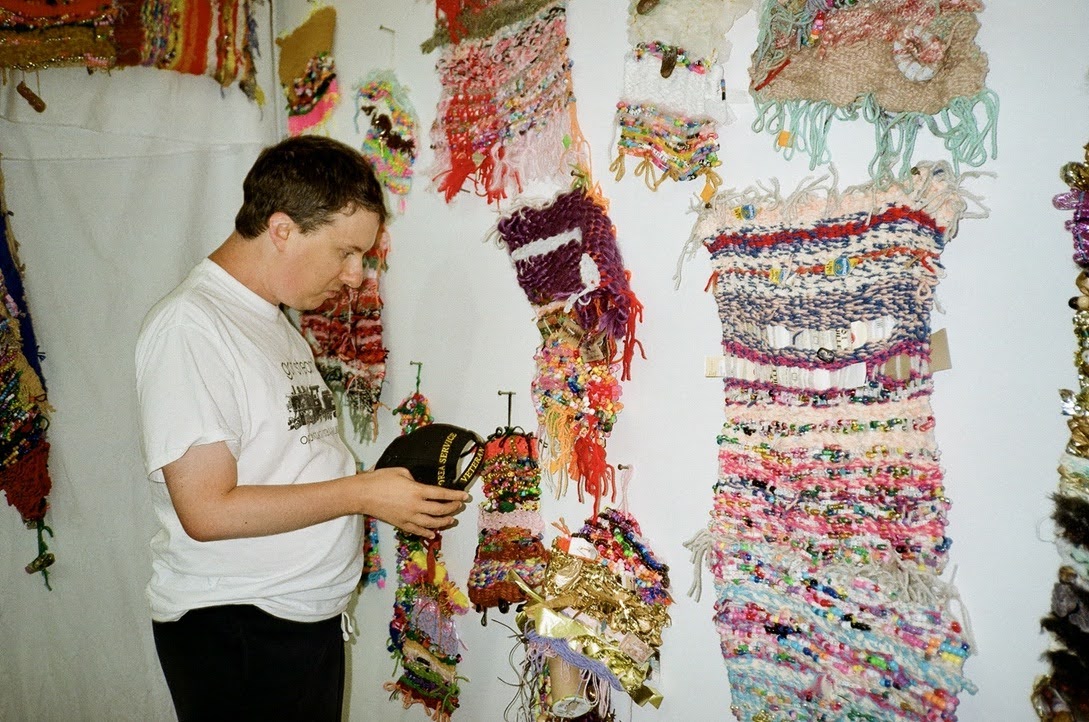
Join artists Ricky Bearghost and Brian Teters from Elbow Room for community crafting! Elbow Room is a non-profit community art studio in SE Portland focused on providing material support, mentorship, and meaningful exhibition opportunities for artists with intellectual and developmental disabilities.
About the artists
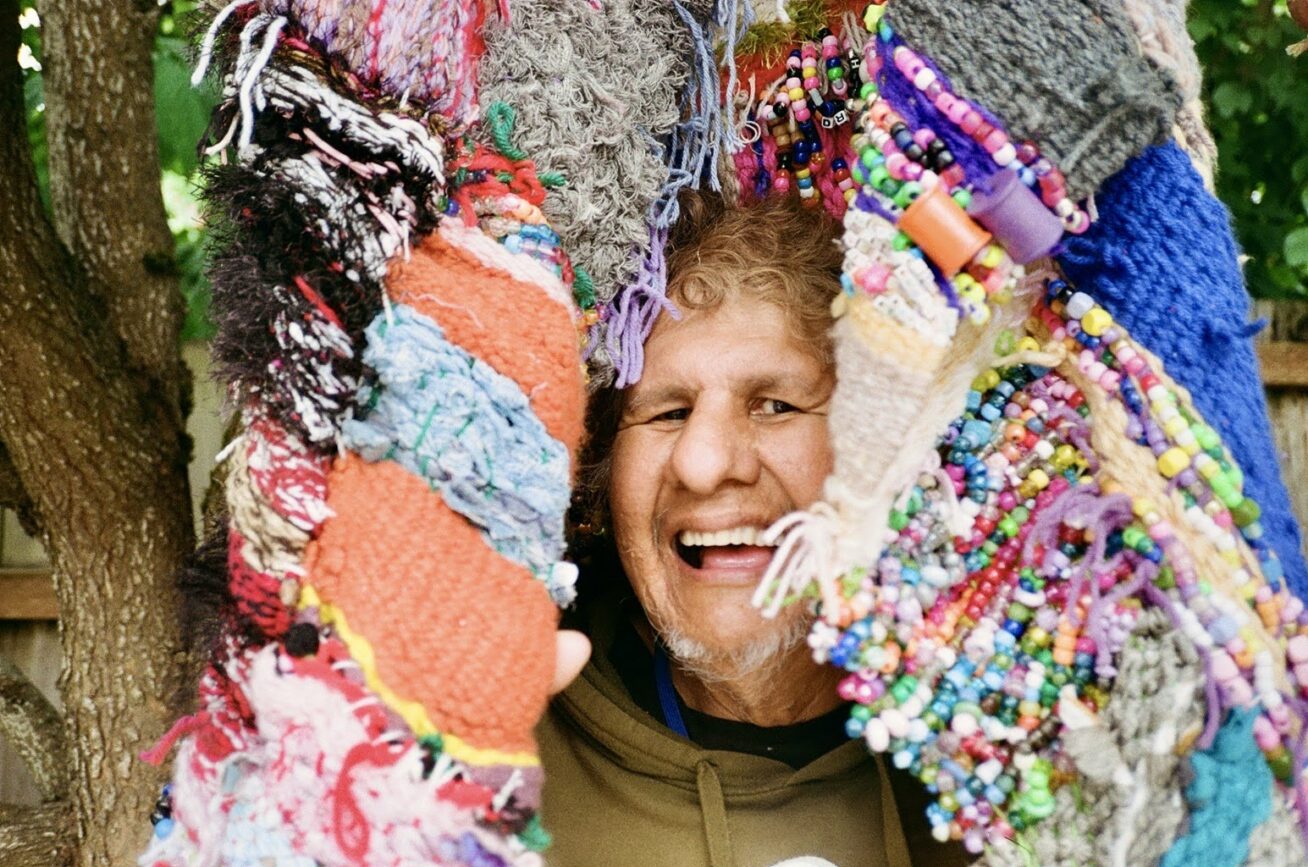
Ricky Bearghost
Multidisciplinary Artist
Born in Sioux Falls, South Dakota, Ricky Bearghost is a member of the Three Affiliated Tribes—the Mandan, Hidatsa, and Arikara Nation. Ricky has become notorious for making vibrant, expressive weavings full of rainbow pony beads and found and scrounged materials. Ricky has been expanding his textile practice by hand-stitching woven panels into colossal garments and hand-carving wooden furniture with woven chair seats. Ricky is also a prolific and exuberant maker of collages, often gravitating towards images of food, and particularly produce, each page a veritable feast.
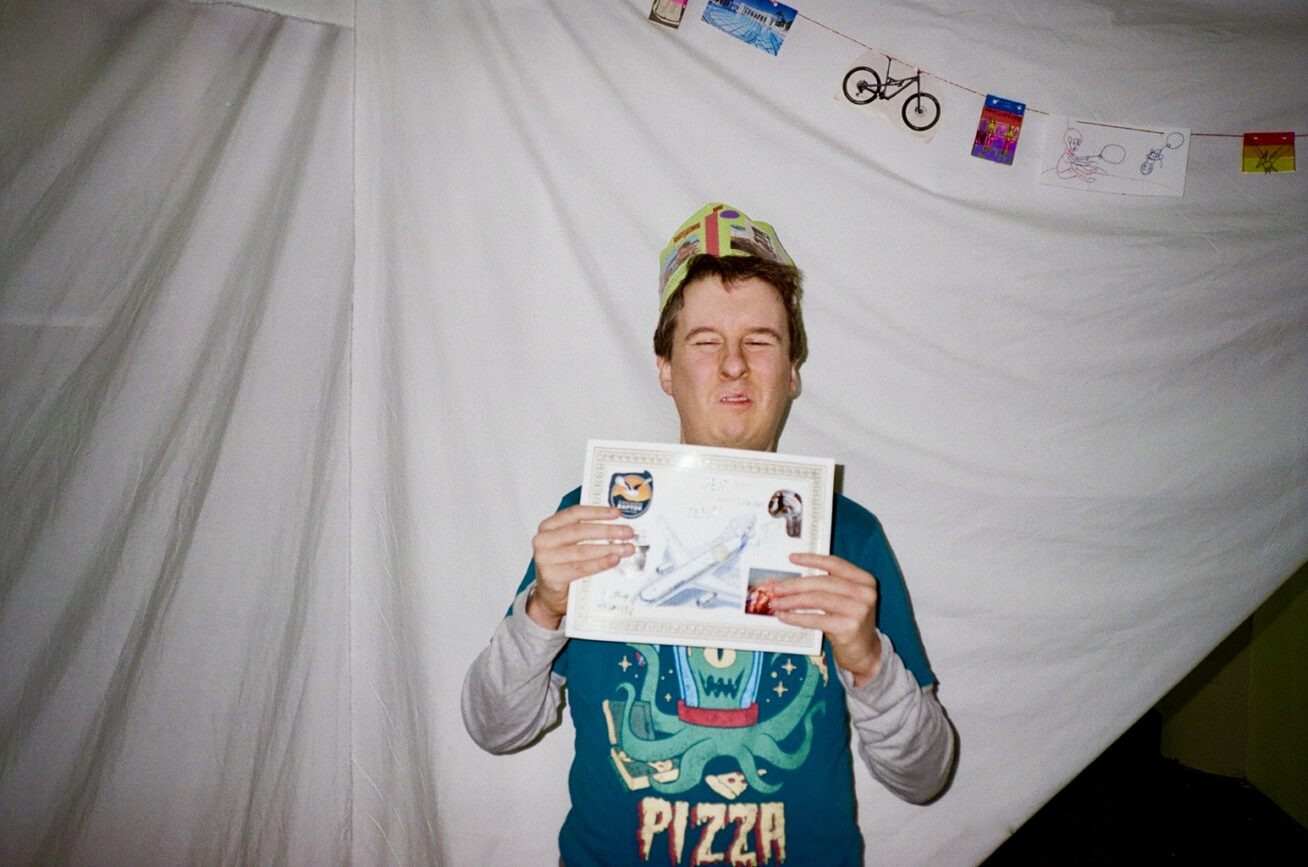
Brian Teters
Multidisciplinary Artist
Brian Teters was born and raised in Portland, Oregon. Brian constructs his miniature collages quickly and with purpose, switching fluidly between disparate tools, techniques, and image sources guided by a combinatory logic akin to a mnemonic matching game–landscapes from National Geographic stand in as mental snapshots of family trips to Mt. Hood and the Oregon Coast, bicycles and musical instruments are selected as tokens of his father; he sees his mother in a flowerbed from Better Homes & Gardens and so builds her a paper bouquet. When he finishes a batch of figures, he gets up from his desk, presents his tiny gifts, and finds a home for them in his immediate environment. His work is grounded in these tiny gestures of affection.